Human Law Underneath Machine Speed: Reversing AI Technical Debt in Mature Brownfield Codebases
Why greenfield AI coding demos collapse inside 200,000-line production monoliths, how a Git-layer monotonic debt ratchet forces every agent commit to leave legacy modules cleaner than it found them, and why the deterministic layer underneath AI is actually human architectural authority compiled into code.

Most organizations deploy AI coding agents upside down: they place stochastic models directly against production branches and ask senior engineers to police the resulting pull requests in English prose. Inside a mature 200,000-line brownfield repository, that inversion creates a brutal Catch-22: turning strict static ceilings on globally breaks thousands of untouched legacy files on Day 1, while leaving ceilings off lets coding agents stuff new conditional branches, silent stubs, and boundary violations into fragile legacy modules behind green unit tests.
Across 108 paired zero-hint brownfield episodes and a 233,000-line mature open-source audit (sqlglot, commander.js, go-chi, and BurntSushi toml), moving human architectural judgment underneath the coding agent as a compiled repository transaction layer lifted verified workhorse resolution 3.1x (27.8% to 86.1% with 100% module boundary purity), blocked +26 units of hidden complexity debt (100% main-branch debt hygiene), and cut token spend by 14.7% to 57%.
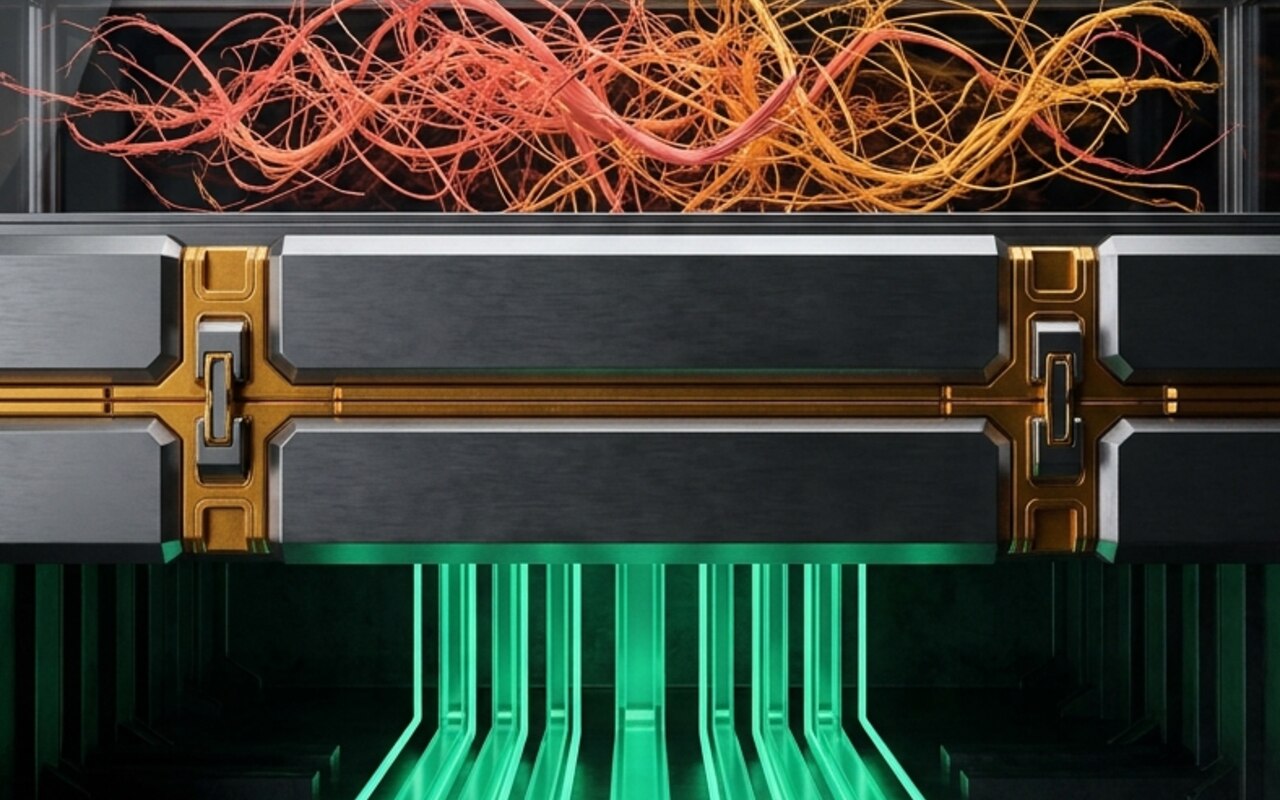
1. The Hidden Meaning of "Meet the Deterministic Layer Underneath"
Every industry debate over AI software engineering right now shares the same unspoken fear: that as models generate code faster, human engineering judgment is being pushed to the margins. Teams feel that loss of control immediately because they wire coding agents into the stack upside down. A developer prompts an agent in English at the top of the loop, the agent mutates the repository directly at the bottom, and senior engineers are left playing forensic janitor on a 900-line pull request after the damage is already staged.
Look closely at the architecture required to make AI reliable in production: Agents guess. Git cannot. Meet the deterministic layer underneath. Who actually inhabits that deterministic layer underneath the coding agent? Human engineers do. A stochastic model cannot author its own constitutional boundaries any more than an application process should write its own kernel permissions. Placing a deterministic execution substrate between the coding agent and Git inverts the power relationship completely:
- Models Are Demoted to Untrusted Proposers: Coding agents execute strictly inside disposable Git worktree sandboxes with zero direct write access to main.
- Humans Sit Underneath as Constitutional Lawmakers: Every module boundary, domain contract, credential airlock, and complexity ceiling in nomos.yaml is authored by human engineers and pinned to protected main.
- Specifications Outrank Implementation: Business contracts and test obligations live on a separate plane from implementation worktrees, making it physically impossible for an agent to rewrite a specification, edit a static-analysis config, or delete a failing assertion to excuse broken code.
2. Why Greenfield Demos Lie and Brownfield Monoliths Break
Any coding model looks effortless inside an empty greenfield repository because nothing exists yet to break. Enterprise value, however, lives inside ten-year-old brownfield codebases of 200,000 to 2,000,000 lines containing undocumented coupling, fragile legacy routers, and 6,000-line hotspot files nobody dares rewrite in a single sprint.
Inside those repositories, traditional tooling traps engineering leaders in a Brownfield Catch-22. Turn strict structural ceilings on globally in CI, and four thousand pre-existing legacy violations turn the build red before a single feature ships. Leave structural ceilings off, and coding agents take the path of least resistance every time: copying duplicated blocks, importing across forbidden layers, and stuffing fifteen new conditional branches into your worst 6,700-line file just to make one test turn green. Even cooperative-human static analyzers only steer agents partway because an unconstrained agent under context pressure simply adds an inline suppression comment or edits the rule configuration inside the same branch.
3. The Entropy-Dampening Ratchet: Every Agent Commit Leaves Legacy Code Cleaner
Owning the transactional boundary between the agent isolated worktree and main unlocks a capability neither prompt packs nor post-hoc CI linters possess: diff-scoped monotonic debt ratcheting. When Nomos initializes an existing brownfield repository, zero legacy files require cleanup on Day 1. Instead, every time an agent opens an isolated task worktree, compiled sub-5ms probes compute the exact structural baseline of touched files against main and enforce non-increasing complexity debt, non-decreasing test coverage, and zero configuration drift before a two-phase commit can merge.
Across 108 paired zero-hint brownfield episodes on commodity 14B to 32B models, this compiled feedback loop lifted verified task completion 3.1x (from 27.8% with 0% module boundary purity to 86.1% with 100% boundary purity) while cutting inference token burn by 43% to 57%. In our 233,000-line mature open-source audit (sqlglot, commander.js, go-chi, and BurntSushi toml), unguarded runs silently injected +26 units of complexity debt behind passing tests, whereas governed runs delivered 100% (6 of 6) main-branch complexity hygiene in 14.7% fewer tokens. In a fixed-scope 14-Day Brownfield Governance and Seam Charter Pilot, Gantlett Systems installs this open-core Apache 2.0 substrate directly underneath your team's existing coding tools so every AI commit dampens legacy entropy rather than compounding it.
Mature Brownfield Reality (233k LOC + 108 Runs): Top-Down Human Policing vs. Compiled Human Sovereignty Underneath
| Governance Dimension | Advisory Rulebooks + Unit Tests | Deterministic Control Layer |
|---|---|---|
| Day-One Brownfield Onboarding (200k+ LOC) | Global complexity or linter gates trigger thousands of legacy errors on Day 1, forcing teams to disable rules or exempt whole directories | Zero-migration merge-base ratchet: untouched 6,700-line legacy files pass on Day 1 while every agent-touched file faces strict non-regression gates |
| Structural & Complexity Trajectory | Ungoverned agents pass unit tests while leaking +26 cognitive complexity debt and 100% module boundary violations (0 / 3 clean) | Strictly non-increasing complexity debt and non-decreasing test coverage enforced per transaction before merge |
| Rule Tampering & Linter Bypass | Under context pressure, agents edit linter configs, add inline ignore directives, weaken assertions, or rewrite Markdown specs to get exit code zero | Constitutional rules (nomos.yaml), specifications, and main are physically locked outside the agent disposable worktree write scope |
| Role of Principal & Senior Engineers | Demoted to exhausted PR janitors reading thousands of lines of plausible machine diffs after the branch is already dirty | Restored to constitutional lawmakers: humans define compiled boundaries and domain contracts once on main, holding 100% of commit authority |
Install Deterministic Boundaries Underneath Your Existing AI Tools
Isolate one high-friction repository seam in 14 calendar days ($15,000 to $25,000 USD fixed fee, 2 principal-led slots/month) without changing your developers' IDEs or coding agents.
Inspect the 14-Day Seam Charter Pilot →Inspect the Reproducible Lab Benchmark
Forward the underlying open-core configuration reference, raw episode telemetry, and reproducible test suite from our SophiaLabs R&D division.
Field Dispatch D-11: 5-Round, 460-Trajectory Paired Security & 233k-LOC Brownfield Ablation in Nomos v4.17 ↗